How Do Wildfires and Smoke Affect Fly Fishing?
How wildfires and smoke affect fly fishing: the air you breathe, whether the fish bite, and what the fire does to the river. Plus how to make the call.
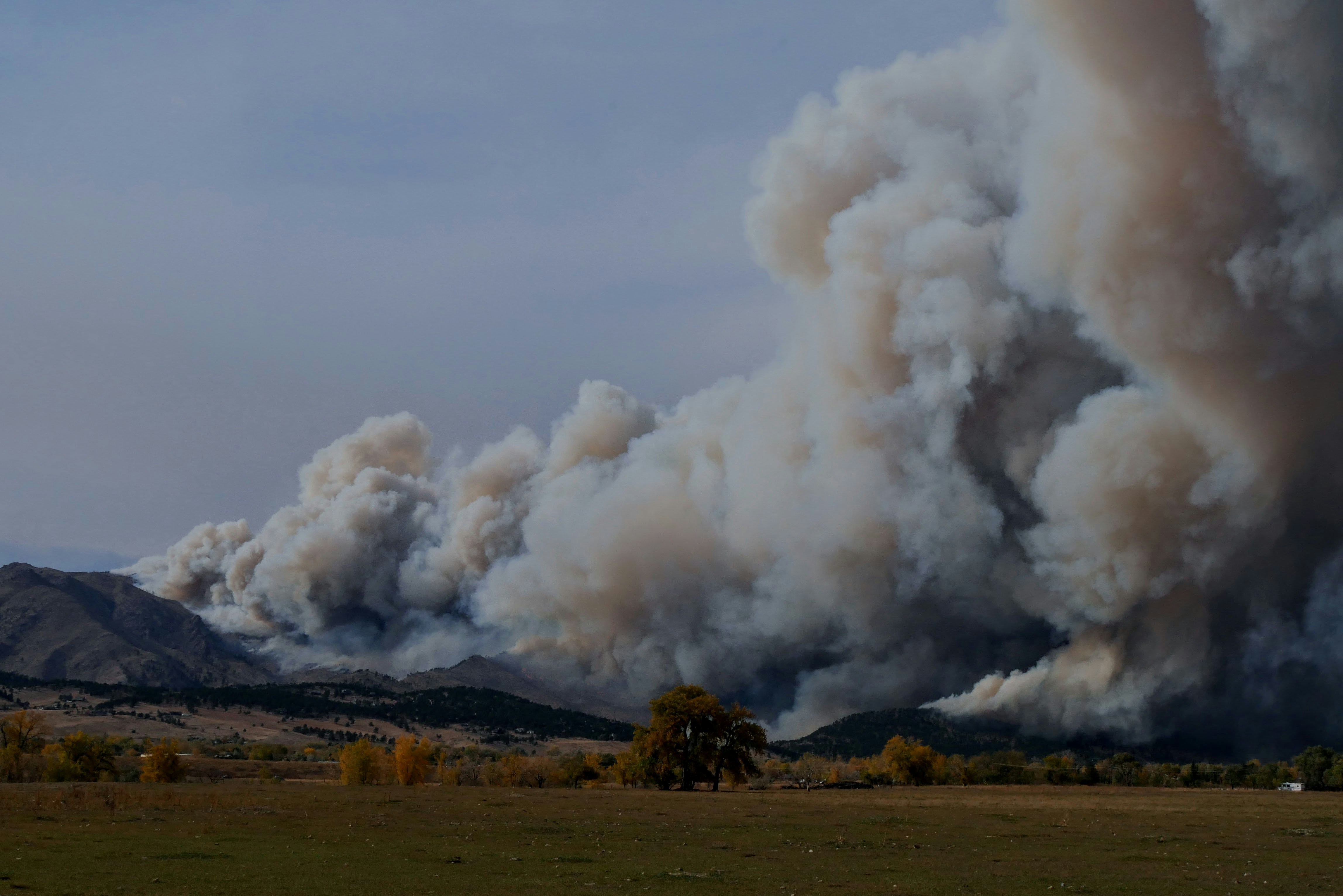
It's late summer in the West, there's a haze in the valley and an orange tint to the light, and you can smell the smoke from a fire somewhere over the ridge. The forecast says the river's fishing well. The question in your head is whether you should still go.
Wildfires and their smoke change the fishing in a few concrete ways: the air you're breathing, whether the fish are biting, and what the fire does to the river itself once the rain comes. Some of that is about you and some is about the water, so it helps to keep them separate. Here's how each one plays out, and how to make an honest call.
First, the air you'll be breathing
Wildfire smoke is more than an unpleasant smell. The fine particles in it, the ones measured as PM2.5, are small enough to reach deep into your lungs and pass into your bloodstream, and a day of fishing is a day of steady outdoor exertion, which means you breathe more of it in than you would sitting on the porch.
The simplest tool is the Air Quality Index, and it's free. Sites like the EPA's AirNow give you the current and forecasted AQI for your exact area. The rough guide the health agencies use: under 100 is fine for most people, over about 100 is where sensitive groups (older folks, kids, anyone with asthma or heart or lung issues) should start taking it easy, and over about 150 is where everyone should cut back on hard outdoor activity, shorten the day, or stay in. This is not medical advice and every body is different, so check AirNow before you drive out and listen to how you actually feel on the water. A scratchy throat and a headache by noon are the smoke telling you to call it.
Does the smoke change the fishing?
Here's the honest answer most articles won't give you: not as much as the fishing folklore claims. A smoky sky knocks down the light, and low light can stretch the low-light feeding windows a little, so a hazy day isn't automatically a dead one. But the research on smoke and fish behavior is mixed and modest, and there's no magic smoke bite. Don't plan your trip around the haze helping you.
What matters far more is the weather the fire is riding in on. Big wildfire seasons come in hot, dry, drought years, the same conditions that pull rivers down to low, warm water and, in a thin snow year, get them there early. So in a smoky August, the fishing read is the same one you'd run on any hot, low day: the water temperature and the flow, not the haze.
The real danger to the river comes after the fire, with rain
The most damaging thing a fire does to a trout stream often happens weeks later, and it needs a rainstorm to pull the trigger. A burned hillside can't soak up water the way a forested one does, so when a hard rain lands on a fresh burn scar, it sheets off fast and carries ash, sediment, and charred debris straight into the river below.
The result can be brutal and sudden. Those pulses of ash and sediment spike the water's turbidity and crash its dissolved oxygen, and researchers have documented post-fire debris flows killing hundreds of trout in a single tributary in a single day. Ash and fire retardant are toxic to fish on top of that, and the fine sediment can smother spawning gravel for years. So the practical rule in fire country is to give a recently burned drainage a wide berth, and to be especially wary of fishing below a burn scar when there's rain in the forecast. The good news, and it's real, is that rivers are resilient: even after severe burns, the bugs and the fish tend to recover to pre-fire levels within a few years.
The honest part: closures, and when not to go
Some of this decision is made for you, and you should let it be. Fire and area closures exist for your safety and for the crews working the fire, so respect them without looking for the loophole. Roads change fast, air quality changes faster, and a river hemmed in by an active fire is not worth a fish.
And some days the honest answer is simply no. When the air is thick, when the river is already running hot and low from the same drought that lit the hills, when the fish are stacked and stressed in the last cool water they can find, the right move is to stay home, fish a cold tailwater well away from the smoke, or go do something else and let the country recover. That restraint is part of fishing well, and in a hard fire year it's most of it.
Rivus reads the water side of that call for you. It pulls your river's live flow and water temperature, sets them against what's normal, and tells you when a hot, dry, fire-season summer has pushed your water into the back-off zone. What it doesn't do is read the air or the fire lines, and it shouldn't pretend to. For those, AirNow tells you what you'll be breathing, and your local land management agency tells you what's closed. Put the two reads together, the water from Rivus and the air and access from the authorities, and you can make the call in fire season with your eyes open, which sometimes means going early and light, and sometimes means letting it be.
Your river is fishing right now.
Go see what's working.
Live conditions, real hatch reads, and a hand when you're stuck. Free to start, no card required.
Your river is fishing right now.
Go see what's working.
Live conditions, real hatch reads, and a hand when you're stuck. Free to start, no card required.
Your river is fishing right now.
Go see what's working.
Live conditions, real hatch reads, and a hand when you're stuck. Free to start, no card required.